Friday, May 6, 2016

5 More Things You Didn’t Know About Parsi Surnames

No, Titwala is a suburban railway station on the Mumbai Central line. Not the surname of a chubby Parsi guy.


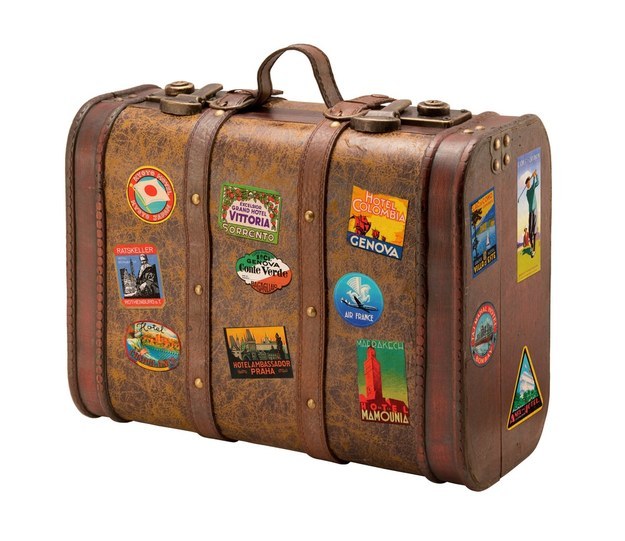
1. We’ve made homes in distant far-off places (and surnames out of them)

We've made homes in distant far-off places (and surnames out of them)
You can see how far and wide we’ve traveled and settled from our surnames: Bengal (Bengallee), Kerala (Malabari), Burma (Rangoonwala), Yemen (Adenwala) and China (Chinoy)

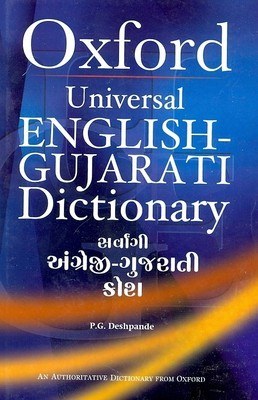
2. Gujarati was our mother-tongue. Now it’s English.

Gujarati was our mother-tongue. Now it's English.
So Mr. Vaid became Mr. Doctor, Mr. Vakeel became Mr. Lawyer, Mr. Mistry became Mr. Contractor, and Messrs. Daruwala, Batliwala, Motiwala et al became Messrs. Merchant, Merchant, Merchant & Merchant.

3. Phir bhi, dil hai Hindustani

Phir bhi, dil hai Hindustani
Via Pinterest
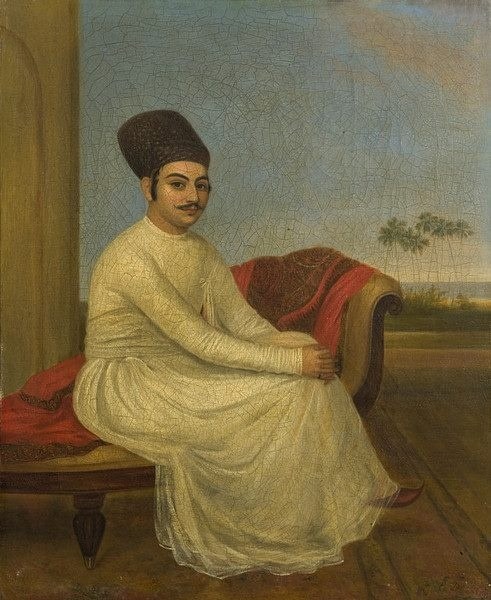
Some of us wear our Indian-ness on our sleeve. Or in our names. We’ve also adopted distinctly Indian names. Like Tarachand, Cassinath (Kashinath) and Govekar

4. We’re all related

We're all related
Lala Deen Dayal
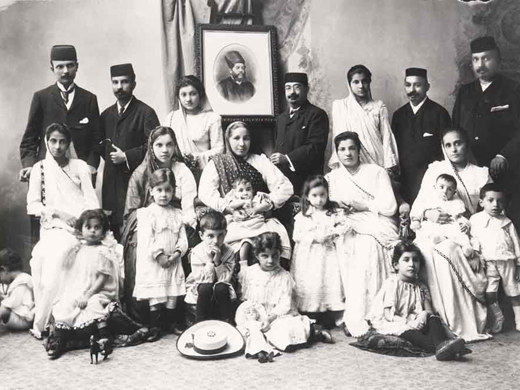
Mama. Bhanja. Chacha. Kaka. They are Parsi surnames too.

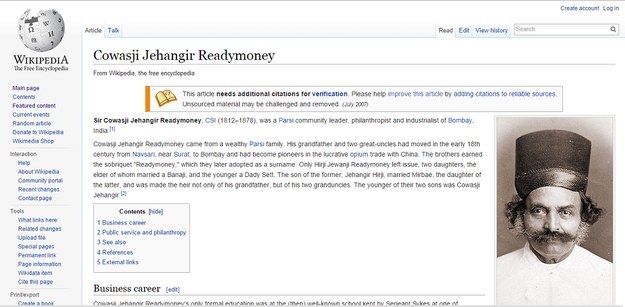
5. Readymoney

Readymoney
Wikipedia
That’s a Parsi surname. I swear!

Parsi surnames and the places they are derived from

The etymology of Parsi surnames has always fascinated me. As a child I could relate a few to trades and professions (Doctor, Engineer, Driver, Lawyer) but my own surname stumped me. So I asked my grandmother what it meant. Umrigar is derived from Umra, a village near Surat, she told me. And Elavia? I inquired about my cousins' surnames. From Elav. And Arethna? I persisted with more of my cousins' surnames. From Areth.
Thanks to this information, I could make connections between surnames and place names I would come across on travels to Gujarat, and as I grew older, on maps. Billimorias from Billimora, Udwadias from Udvada, Satarawallas from Satara, Bharuchas from Bharuch...
As I explored the interiors of South Gujarat on my researches regarding rural Parsi communities, I came across the origins of many more surnames in the names of tiny villages and hamlets away from the Parsi centres of Udvada, Navsari and Surat. Places that are off the map and therefore off our radar.
As Google Earth and Google Maps became new fascinations for exploring near and faraway places, I discovered many more places from where our surnames originated.
Finally, I decided to bring these two fascinations - surnames and maps - together and created this possible map of where our surnames come from.
(I say 'possible' because as I tried to map surnames to places, I realised there is more than one village with a similar name, and that too not too far from each other. Also, I'm no expert on etymology and the connections I have made are not researched but more like educated guesswork.)

Friday, September 25, 2015

Confessions of an unfaithful spouse

Advertising was my childhood sweetheart.

I’ve known her since I was a kid. She would always be around, either singing “Tandurusti ki raksha karta hai Lifebuoy” and “Happy days are here again, Thums Up, Thums Up”, or saying things like “Bhala uski kameez meri kameez se safed kaise” and “Coldarin li?”, or cracking puns with the Air India maharajah and the Amul girl.

I was quite fond of her then. But I only began to grow close to her when I hit my teens and discovered her again in the pages of magazines. She would look very pretty, sitting coyly in between pages full of words, beckoning me to get to know her more.  I started noticing the little things about her, that tiny key number just below the hemline of her skirt, those exotic Indian words she used to spout like Ulka and Chaitra and Trikaya.

I tried to resist her charms. She was flirty, quirky, alluring. Not the kind of girl you introduced to your parents. And my parents were keen I pair up with this other chick called Engineering. (To please them, I even went out with her for a few years. We were very stiff, very awkward with each other. Despite the years we spent together, I never got to know her well. When I finally decided to break up with her, I felt a surge of relief.)

Meanwhile, Advertising and I continued to meet behind Engineering’s back. Her songs were more seductive now. “How are things with you? Do I see a welcome in your smile?” “Mile sur mera tumhara.” “Hamara kal, hamara aaj.” She was persistent in her pursuit. And so, much against my parents’ wishes, who after my break-up with Engineering wanted me to get into a match with MBA, I got married to Advertising.

Seven years later, I fell out of love with Advertising.

Around the time I fell in love with Advertising, there was this other girl at the periphery of my vision – FTII. There was something attractive about her, but also something forbidding. She was artistic, creative, philosophical – and way out of my league. I felt inadequate and never approached her, though I desperately wanted to. I feared being rebuffed. Her rejection would be devastating.

But the years I had spent with Advertising emboldened me to seek her out. I asked, and she accepted. An intense, all-consuming relationship ensued. It was fraught with long periods of self-doubt, introspection and self-discovery. And short bursts of exhilaration and ecstasy.

She made me a better man.

But all good things have to come to an end, and so it was with me and FTII. We parted, but it was amicable. We still remain good friends.

The affair left me drained, and for succour, I returned to Advertising, like a philandering husband who keeps coming back to a forgiving wife.

But the rapprochement was short-lived.

Right after my affair with FTII was over, I had wanted to move in with her cousin, Documentary. FTII had introduced me to Documentary in the early days of our affair, but Documentary and I really began to hit it off only when I was in the final throes of my relationship with FTII. But Documentary was idealistic, principled and demanding. And after an exhausting relationship, I wasn’t ready for another just like it.

A few months into my restarted relationship with Advertising, I realised it was not working out.

I was missing Documentary.

I called it quits with Advertising. Again.

Documentary and I moved in together. We lived on little, just love and fresh air. We were living a dream. Hanging out with her friends – Cinema and Art and Literature. Meeting new interesting people like Anthropology and Philosophy.

And then, I met someone else. A human, this time. And the three of us couldn’t co-exist.

I reneged on my commitment to Documentary. 

I needed someone who was supportive of me and at the same time, blind to my indiscretions. And so I went back to Advertising.

But Advertising had changed. Or I had.

Her songs no longer sang to me. “Har ek friend zaroori hota hai” and “Dhak Dhak” did nothing to reawaken our romance. Her lines now sounded trite and banal: “What an idea, Sirji!”

But I did what she asked me to do. My needs were more important than my desires. At times, I felt like a gigolo, fulfilling her demands in return for her money.

I’ve spent another 7 years with Advertising. But this time in a loveless marriage.

I feel ripe for a fling. Perhaps with that homely girl I’ve been ignoring for far too long – Television. Or with Films, that desirable siren who’s ruined the life of many a man. Or with Teaching, even though I don't think I have the patience for her.

Or maybe, I should just go back to the comforting arms of my Documentary.


Saturday, September 5, 2015

Happy Teacher's Day, Miss Lumena

If I can credit someone with changing the course of my life, it’s Miss Lumena, my 10th Standard English teacher.

I think she barely noticed me in class during the first term, and I too didn’t do much to attract her attention.

At the beginning of the second term, we were given our corrected exam sheets of the previous term to inspect. We were supposed to go through them, point out errors by the teachers like an answer marked incorrectly, or a totalling mistake, or an answer left unmarked, and get them rectified.

As I went through my English exam sheet, I noticed a note in the margins of the essay I had written: “This deserves to be published in the school magazine.”

My instinctive reaction was to leave it at that; I didn’t think it was such a great essay.

But something in me made me go up to her and ask her about that note in the margins.

She began to notice me after that. Invariably, I would be made to read out what I’d written in class – compositions, essays, even answers to the questions at the end of the text.

Eventually, the term was up. The preliminary exams ended, and before we took a month’s study leave to prepare for the Board exams, we had an Open Day for parents and students to meet teachers and discuss our strengths and weaknesses in their subjects.

When I went to meet Miss Lumena, our conversation turned to what I planned to do after school. “Engineering,” was my pat reply.  Till then, if you asked me what I wanted to do in life, the reply was always engineering. I loved Maths, and my role models – my maternal uncle and an older cousin – were both engineers.

“But you should do journalism,” she said. “You write so well.”

The idea appealed to me. I broached it to my parents. “Nothing doing,” said my mother, “journalists get killed.” I was given a choice of four streams to make a career in – Medicine, Engineering, Chartered Accountancy and Law. I chose Engineering.

But the thought that I could make writing a career had been planted in my head.

Happy Teacher’s Day, Miss Lumena, wherever you are.

(Illustration of Miss Lumena by a fellow student of hers – Anil Damodaran)


Monday, March 16, 2015

5 Things You Didn’t Know About Parsi Surnames

Want to know the origins of your favourite ‘wala’? Voila!


1. Sodawaterbottleopenerwala? There’s no bottle opener in it.

Sodawaterbottleopenerwala is a fictitious surname. But Sodawaterwala is for real.
Sodawaterbottleopenerwala? There's no bottle opener in it.
Google/Kaevan Umrigar

2. My name is Jeejeebhoy Jamshedji, the Parsi guard of the GIP.

My name is Jeejeebhoy Jamshedji, the Parsi guard of the GIP.
A lot of Parsis used to work in the Indian Railways, which explains surnames like Driver and Guard.

3. No butcher, no baker, no candlestickmaker

No butcher, no baker, no candlestickmaker
But we have a Billiardmaker, a Watchmaker, a Cabinetmaker and a Bobbinmaker.

4. We are more British than the British.

We are more British than the British.
Via Wikipedia
Which explains surnames like Forbes, Crawford, Cooper, Baxter, Nicholson, Morris, Spencer… The list goes on.

5. Hell, sometimes we’re even French.

Hell, sometimes we're even French.
Vraiment!

Monday, March 2, 2015

Tarapore: A Parsi heritage village?


My first thoughts on visiting Tarapore were, hey, I have to shoot my film on India’s dwindling Parsi population here. My very next thoughts were, why can’t someone preserve this place as a heritage village?

I had come to Tarapore after a month or two of exploring small towns and villages in the state of Maharashtra where Parsis had once flourished but lately had been reduced to insignificance. All of them were places where the Parsis had followed the British – either the army or the railways – in search of business and employment. In these places, I would find a fire-temple (usually with a lock on the door), one or two surviving Parsi businesses and little else.  But Tarapore was different.

Tarapore is just south of the Gujarat coast where the Parsis first landed in India. It probably was one of the early Parsi settlements (Sanjan, the site of the first landing, is barely 50 km away). What I found here was missing in the other places I visited – a Parsi character.

Tarapore was home to 300-400 Parsis till the 1930’s. In the 1970’s, the community there was still surviving, albeit in drastically reduced numbers. The 1980’s sounded its death-knell. The tower of silence fell into disuse. The fire-temple would function only sporadically. Older residents died, younger ones who had migrated to Mumbai and elsewhere has lesser reason to visit frequently. Houses remained locked up, either to crumble away or be encroached upon.

When I visited Tarapore in 2005, I found the Parsiwad, the village’s Parsi quarter, almost deserted. The tower of silence had been vandalized with lewd graffiti. The fire-temple and the dharamsala, the Parsi traveller’s rest-house, though had been renovated and were functioning.

It struck me then, that in a distance of a kilometre or two, the village had all the artefacts to showcase the traditional Parsi way of life to visitors. If a conservation group got together, restored the houses, the fire-temple, the tower of silence, the rest-house et al, it could become a living museum, and with Mumbai just a two-hour drive away, even a tourist attraction.

It was just a passing thought at that time. Four years later, I visited the Skansen museum in Stockholm, Sweden. Skansen is an open-air museum. On exhibit are Sweden’s traditional homes and villages, actual structures transported brick by brick before they are lost to posterity. A stroll through Skansen is a walk down centuries of Swedish culture.

Tarapore could easily become something similar.

Yes, it will take some effort. It will require the co-operation of community trusts in the village (they manage the community properties) and the heirs of deceased residents (they now own the homes). Restoration will be expensive. And making the heritage tour a memorable experience (like Skansen) will be a challenge. But Skansen shows us that it’s possible. All it needs is some will.

It’s now 10 years since I made my film on Tarapore. But one thought persists. Why can’t someone preserve it as a heritage village?

Tuesday, January 13, 2015

Educating Hana

“The parent is a client, and the child is a product.”
(From 'When parents pay for international schools what do they think they are getting? And is it paisa vasool?' by Margot Cohen)

I studied in a school with wide open windows that welcomed in fresh air and sunshine. It had vast grounds to romp around in. Sure, we learnt by rote, but we managed to learn to think for ourselves by ourselves all the same.
My daughter will soon be of school-going age, and we are looking for a good school close by home which will not rein in her curiosity and creativity. An international school not too far away was being talked about a lot, and I went to attend an introductory session there to see if it was right for her.
The experience was bizarre. I sat through a corporate presentation delivered by a power presenter who called herself an Admissions Officer (a euphemism for Sales & Marketing, I'm sure). That put me off. Educationists should run a school, not marketeers. I was willing to forgive that, though, since the school came recommended by people who I know and whose opinions I value.
But the school tour decided it for me. The classes were air-conditioned, no sunlight or fresh air streaming in. In the recess, the kids were running around in the corridors despite strict admonitions by the teachers (the school doesn't have a ground, sports periods are on the terrace).
It felt like an office, not a school.
I'm sure their teaching is great. My friend's son who studies there is 6, and knows more than what I did at his age. But...
Hana will now go to a standard school a block away from home. She will look in awe at sunbeams breaking in through the windows while her teacher drones on and on. She will wait in anticipation for the breaks so that she can get out of her stifling class into the open. And she will run home with joy when the bell rings.
And somewhere in between all that, she will learn to think for herself, by herself.

Tuesday, August 12, 2014

Recent discoveries on YouTube

Two songs I can't stop enjoying since I found them by randomly clicking on YouTube recommendations.

Mungo Jerry's "In The Summertime"


And Stealers Wheel's "Stuck In The Middle With You"


Thursday, August 7, 2014

The 42-year-old orphan

The presence of parents - no matter how old you are or how troubled your relationship with them - is a comfort and a reassurance you realise only in their absence. The subconscious knows you still have them as last call of hope when things go wrong; it knows from memory you will find in them the emotional support you seek. It also knows without them, you are on your own.

I'm nearly 42 and I feel orphaned. I can only imagine what a young person goes through when they lose their parents.

RIP, Dad


I lost my Dad on Sunday. We were never really close. When I was growing up, our conversations were usually functional. His "Do this" versus my "I want". He was a strict - sometimes stupidly so - disciplinarian, who didn't see any cruelty in giving a college-going son a rupee a day for pocket money. Still, he was a man I respected and admired, mainly because of his insistence on doing the right thing. That respect came crashing down, however, when I discovered that he was just a man of straw, not the honest principled man I thought he was. And the conversations ceased between us, even the functional ones. His ego didn't allow him to acknowledge his mistakes and make amends.

He was not a bad man. Neither a bad father. I didn't have an unhappy childhood. But when I try and think back of happy moments spent together - just he and I - no memories come rushing back.

We never made our peace, Dad. Perhaps, I never will. But you rest in peace, Dad, rest in peace.

Wednesday, November 21, 2012

 
A few days back, I read on a friend's timeline that the man in the picture is no more. Since then, many other friends from FTII have acknowledged the influence this man had on them. I've been struggling to put into words my feelings about him too. For more than 4 years of my life at FTII, this man was an abiding presence. He appeared one day on campus while we were in our first year, and stayed there. The whispers were, he was an alumnus, who used to work at O&M, had suffered a deep personal tragedy and was probably suffering from schizophrenia. He was adopted by the students and made the campus his home. I was just discovering the comfort of being within the four walls of the Institute, and likened it to returning to the womb. My fellow students would talk to him about life, films, scripts. But me and him, we hardly spoke a sentence to each other. Every time we passed each other, we would just exchange a smile. I didn't know how to express this mutual understanding between two silent unexpressive men into words. Till today an email by Priya Krishnaswamy, a senior at the Institute, perhaps summed up the jumble of my thoughts.

"I felt that he was very self-contained, happy in his own world, and that it would be an imposition to approach him, and so I never did.

But he was every where... one of the first faces I'd see at the canteen at breakfast, walking quietly down to the Tree, waiting for a screening outside the MT.

I'd see the students talking to him, and the gentle way he'd respond.

I'd hear the love and protection and pride in their voices when they spoke of him.

The overriding image I have of him is this - he was so self-effacing. He took up so little space, and yet, he was everywhere.

RIP"

Good-bye, Rahul da. I will miss you.

Wednesday, December 21, 2011

My first friend


The first friend I had in life was my mamu, my mother's brother. More than an uncle, he was a buddy. Every evening, I would wait for him to come home from work. As soon as I heard the familiar phat-phat of his scooter, I would race out of my home and accompany him two flights of stairs up to his. There, I would wait patiently till he had his bath and ate a snack that my grand-mom had prepared for him, and then we would hang out together. We would go for a spin on his scooter around the colony or drop in to his friend Kersi's place or just go to the circle down the road to pick up a lottery ticket.

He had all sorts of nicknames for me. When I would go to him crying because I had been scolded by my parents, he would call me Kashmira, a girl's name. When he needed some help to fix something at home, I would be Begaari, labour. But his favourite name for me was Saparchand, apple or figuratively, simpleton. I would retaliate and call him Keru, banana. But it never had the effect I desired on him.

He clicked pictures of me and my sister through our childhood, and then lovingly mounted them himself in an album. We still have that album and treasure the memories of our childhood. The picture above is from that, of him holding my little sister. (Unfortunately, it's not of the two of us together.)

The album was kept away, locked in his cupboard, and we had to demand to see it. We weren't allowed to turn the pages. He would turn them himself. The first picture was his. He would point to it and say "Behesti (the late) Dara Bomanshaw Desai."

He took me to my first movie. He took me to Chowpatty to go up Bombay's first escalator and see the public Diwali fireworks. To the Don Bosco church where we waited in a serpentine queue to get a glimpse of a newly installed statue of Mary.

When I was in kindergarten, he made me bunk school on a Saturday and took me to Udwada for a weekend. When I asked him what do I tell my teacher when she asks the reason for my absence, he told me to say, "Heart fail." I chickened out, however. When the teacher indeed asked me why I hadn't attended school on Saturday, I truthfully said I'd gone to Udwada.

When I was a little older, he was transferred to Goa on work. I would wait for his vacations to Bombay with great anticipation, first counting down the days and then the hours to his arrival. On Thursday, my mid-week school holiday, he would take me out on a whole-day outing. We would leave in the morning on his scooter to his office at Wellington Mews, then to the World Trade Centre to buy shirts, always from Stanrose. The rest of the day we would visit relatives, his masis and mamas and cousins. My sister would be very jealous of these outings; Mamu was her friend too, but never such a big one as mine.

He had a signature whistle. Every time he bounded down the stairs, down from his house to mine, he would whistle. That was our cue to run to the door and open it. My first attempts at whistling were to imitate that signature tune.

That wasn't the only thing about him I tried to imitate. My ambition then was to be an engineer like him, and I even ended up studying in the colleges he studied in - Ruia and VJTI - before realising that my ambitions were actually elsewhere.

There are a couple of things though about me which I think are completely his influence, on reflection. A morbid sense of humour. And the way I behave with the children of my friends - more like a friend than as an uncle.

When I was 12, he married. Something ended then. Things were never the same after. He had his own family, and I moved on to newer friends. We became uncle and nephew.

Last month, as I watched him battle unsuccesfully with pancreatitis in the ICU at Jaslok Hospital, these memories came rushing back. And with them, the realisation that he was actually the very first friend I had.


Love you, Mamu. And miss you.